Saturday, 23 June 2012

The Songs of Henri Duparc

Matisse: Luxe, calme, et volupté
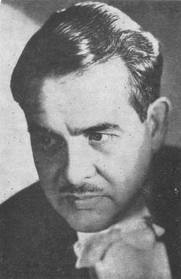
Henri Duparc (1848-1933) is a special case. He lived until the age of 85 but composed nothing for the last fifty years of his life. His essential output consists of just seventeen songs, plus a couple of short orchestral pieces. All these works were composed in the space of fourteen years. Surely someone who wrote so little can hardly be ranked among the great French composers? Ah, but several of those seventeen songs are counted among the greatest of all French songs.

Try Extase. In just three minutes of music, Duparc conveys a Wagnerian sense of yearning mingled with thoughts of death - the essence of Tristan und Isolde. A heavenly melody, gorgeous modulations, a beautiful postlude, Extase is as sensual a song as you will ever hear and one of my favourite songs of all time. 

Duparc's setting of Baudelaire's great poem, L'invitation au voyage, is also very special. The phrase "...beauté, Luxe, calme, et volupté" can be applied to describe Duparc's song as well. The music begins in the minor, gently shimmering, evoking longing and "the irritation of melancholy", but when the poem turns to Baudelaire's vision of paradise (expressed in the famous phrase quoted above) Duparc responds by switching to the major - an effect like sudden sunlight flooding a dark scene - and repeating those words as if lost in dreaming. Genius! 

Duparc's harmonic sense can partly be put down to the influence of his famously chromatic (and Wagner-besotted) teacher César Franck, though his own vivid experiences of Wagner's music had a significant impact too. Another of Duparc's sensual sublimations of Wagner's influence, Élégie, is a particularly masterly song  - a setting of Thomas Moore about an Irish revolutionary who dies for his ideals, that mingles mourning with inspiration. The song soars magnificently to its hopeful climax ("Shall long keep his memory green in our souls") before ebbing away.

There is much more to Duparc though that sublimated Wagnerian harmony. Duparc's melodic gift was far from Wagnerian (or Franckian). Another lovely sad song, Chanson triste, his earliest masterpiece, is a fine example of that. It floods the listener's senses with beautifully-shaped melodic lines, as well as caressing arpeggios and mouth-watering modulations. Its vision of the moonlight of a summer's night streaming from a lover's heart is realised to perfection.

Duparc was certainly a master at conveying sorrow through music, as the early but beautiful Soupir  (dedicated to the composer's mother) and the late, intense Lamento (what gorgeous chords!) show, but he could also summon up feelings of deep restfulness, as in the enchanting Phidylé and could also be dramatic, as in the somewhat Der Erlkönig-like Le manoir de Rosemonde and, even more so, in the stormy, quasi-operatic La vague et la cloche. 

Another song with a touch of Schubert next. In the unusually Pre-Raphaelite Au pays où se fait la guerre, where a girl yearns for her lover's return from the wars, the yearning passes - as yearning often does - from melancholy to sensual desire and keen anticipation. 

The hyper-self-critical composer rejected three of his early songs, but posterity hasn't enough pieces by Duparc so they are now widely performed. The songs in the composer's Salon des Refusés are Le galop, Romance de Mignon and Sérénade. I'd got along with him regarding the first two of these songs but Sérénade is delicious. 

Duparc
The early Sérénade is not to be confused with the later Sérénade florentine, another of my favourites, a gently, lilting love song with an exquisite, subtly-phrased melodic line and an ever-changing emotional flow. Duparc is a true master of broad, flowing melody.

One of the composer's most passionate masterpieces is the wonderful Testament, a song where Duparc approaches the (still-to-come) mature style of Hugo Wolf. Anxious tremolos tremble throughout the piece, which contains passages of the sweetest lyricism and outbursts of the most dramatic kind, capturing all the shifts of mood in the poetry.

The texts and translations of the poetry set by Duparc can be found here. It's always worth reading the poem as you listen to a song. Part of Duparc's achievement - his responsiveness to every nuance of a poem - cannot be grasped unless you do so. You can, of course, just enjoy the beauty of the songs without understanding a word of what is being sung (all opera lovers know that!), but the experience is immeasurably deepened if you do know what is sung about, especially when the composer is Henri Duparc.

Ah, Henri Duparc, his broad, flowing melodies, his magical harmonies, his beautiful accompaniments...

Before ending with another of his greatest songs, and not just for the sake of completeness, you might also wish to hear his only duet, the oriental La fuite. The urgent early stages are all about conjuring up the mood of "Fuyons, fuyons!" ('Let's flee! Let's flee!') but as the girl Kadidja mentions her eyelashes ("Mes cils te feront de l'ombre") the key changes to the major, the agitated figuration is transformed into a magical shimmer and the soprano's line soars rapturously - a beautiful moment. The song continues to alternate in this vein before the voices join together. Ah, if only Duparc had written an opera!

To end, his final song before the long silence fell, La vie antérieure. Another great Baudelaire's poem transmuted into great music. From the solemn and mysterious evocation of the"vastes portiques" and "grands piliers" of the opening section, with its all-powerful chords, through the evocation of the "rolling waves" through its rolling piano figuration, building towards the magnificent, radiant climax at "C'est là, c'est là que j'ai vécu dans les voluptés calmes" - one of the most uplifting moments in the whole song repertoire -, the erotic languor that follows and the final achingly sad recall of "le secret douloureux", this song has everything, yet it lasts only a little over four minutes. Such is the genius of Duparc.

A Tricolor of Composers

Let's journey on down Mexico way again and fill in three gaps before I get to one of Mexico's greatest composers (in the next of my Mexican posts)...

José Rolón
Two trips to Europe tell you probably all you need to know about my next Mexican composer, José Rolón (1876-1945). From 1904 he travelled to France to study with Moritz Moszkowski. In 1927 he returned to France and studied with Paul Dukas and Nadia Boulanger. Moszkowski wrote some large-scale concerto works, most notably the champagne-corks-flying Piano Concerto, but is best known for the many salon pieces he composed. Dukas taught Olivier Messiaen, Maurice Duruflé and Joaquín Rodrigo and - most importantly for this post - Rolón's countrymen Manuel Ponce and Carlos Chávez. Nadia Boulanger influenced large numbers of musicians through her teaching, including composers Copland, Piazzolla and Elliott Carter (among many other familiar names). She tended to promote Stravinsky-inspired neo-Classicism.  

So what do we find in the music of Rolón? Salon pieces, then pieces reflecting his Mexicanness and neo-Classical works. 

For a delightful example of a salon song you won't do better than his Ingrata and the Valse-Caprice sobre el tema "Sobre las Olas" de Juventino Rosas shows that he and Moszkowski were made for each other. Just before his studies with Dukas and Nadia Boulanger Rolón wrote a symphonic scherzo, El festín de los enanos ('The Feast of the Dwarves'), which suggests that he went to study with Dukas with a good deal of prior interest in that composer's music. I hear several points of contact with The Sorcerer's Apprentice though, despite being composed more that a quarter of a century earlier than Rolón's score, the Dukas sounds the more advanced. The orchestration is certainly successful, though the score as a whole is pleasant rather than inspired. There is a tune, though, in El festín de los enanos which sounds like a Mexican folksong (though as to whether it really is one or whether Rolón wrote it himself I'm unable to tell you). As another 'Before' and 'After', you can take the romantic treatment of that tune in the symphonic scherzo and compare it with the treatment of Mexican folksongs in the Danzas Indígena Mexicana (No.2 here). The cleansing effects of neo-Classicism plus the harmonic bite of Stravinsky are much in evidence in these piano pieces. Nadia had clearly taught Rolón well. The change to a Ravel/Stravinsky-style soundworld can also be heard in some of the composer's songs with ensemble, such as El Segador and El Sembrador. Intriguingly, all the influences seem to gather together in the colourful festive finale to his 1935 Piano Concerto. It has to said that José Rolón doesn't strike me as a major composer (on the evidence I've heard) but he's an interesting minor composer nonetheless.

Candelario Huízar
So far we've not yet met any composer, other than (by taking him out of order!) Carlos Chávez, who belonged to the 'Aztec Renaissance' - that determined attempt to draw on Indian and pre-Columbian culture to create an authentic Mexican music. With Candelario Huízar (c.1883–1970), however, we finally meet such a figure. The style of Chávez's thrilling and masterly Sinfonia India (1935-36) is not too far away in Huízar's Fourth Symphony, 'Cora' (1942). There's the same use of Indian melodies, plenty of percussion and dancing rhythms, albeit written on a larger scale. See also mvts. 23 & 4. (The Cora, if you don't already know, are an Indian tribe.) Even closer to Sinfonia India though is Huízar's Sinfonía Oxpaniztli, his second symphony (1936). You can hear the second movement, Danza de Pájaros y Mariposas - Dance of Birds and Butterflies - here and the festive third movement here. (Oxpaniztli, if you were wondering, is a month of the Aztec calender.) OK, neither symphony is as taut and spine-tinglingly powerful as Chávez's paragon (then again Sinfonia India is in a league of its own), but both are thoroughly enjoyable and Sinfonía Oxpaniztli is a cracking piece. (The First Symphony of 1930 seems flabby in comparison). If you want to hear what Huízar sounds like without all that orchestral colour, please try his String Quartet of 1937. Some of the thematic material has the flavour of indigenous melodies (and may well be native Mexican tunes for all I know) and the work has a rich rhythmic quality though the technique applied to treat the themes shows a composer, like his famous compatriots Chávez and Revueltas, closely attuned to the modern European mainstream and sounds closer to that style than you might expect from what you've heard previously. Another side to Candelario Huízar's art, very different to what we've encountered so far, is his ability to compose French mélodies such as J’ai trop chanté. I haven't been able to find the date for that song, which is (as you can hear) very much in the tradition of late 19th century French art songs, with touches of Duparc-style harmony. I'm guessing it's an early piece. 

Eduardo Hernández Moncada
We're in need of a composer (or at least I am!) who gives us some Coplandesque Mexican colour - the sort of colour that comes from using Mexican folk and popular song. For a composer who lived so long and seemingly prospered, the music of Eduardo Hernández Moncada (1899-1995), great friend of Chávez (with whom he also shared a birth-year, as they both did with Revueltas), seems quite hard to come by. Taking a listen to his Scherzino for flute and piano suggests that he must be a neo-Classical composer, as does the piano piece Costeña - though this also suggests that he hada a keen sense of his Mexicanness. The latter piece has folk-tune likes and energetic Latin rhythms but allies them to a wide range of tangy modern harmonies. So do the the delightful Estampas Maritimas. Switching to his overture Bajìo though we have exactly the sort of home-grown El salon Mexico-type orchestral piece that I've been pining for. The aim of this type of work was exactly the same as the aim of composers like Copland in the United States - to write music that would speak directly to their countrymen, music that would be popular and national in character. Bajìo is the sort of piece that brightens up a day. I would like to hear much more Hernández Moncada.

Friday, 22 June 2012

Songs of a Hallucinating Muezzin?

At the end of my post on the Mexican Romantics I added a bit on Juventino Rosas after experiencing a 'Wow!' of delighted recognition on hearing his waltz Sobre las Olas, but the 'Wow!' that came when I began exploring the music of Manuel Ponce's older contemporary, the long-lived Julián Carrillo (1875-1965) was a different kind of 'Wow!' See if you experience something similar when you first listen to his Preludio a Colón (Prelude to Christopher Columbus). 


Carrillo
After listening to the music of the younger Ponce, the soundworld of Preludio a Colón (composed in 1925) came as an even greater shock to me. Were you taken aback too? 

The work is scored for soprano, string quartet, flute, quarter-tone guitar, and sixteenth-tone harp. Yes, there's a flavour of the sort of oriental exoticism found, say, in the middle-period works of the great Pole Karol Szymanowski (such as the Songs of an Infatuated Muezzin) but Preludio a Colón is something else entirely. We are in the world of "Sonido 13", 'The Thirteenth Sound'. This was Carrillo's revolutionary experiment in microtonality, an adventure in adding microintervals between the twelve tones of the Western chromatic scale. The term 'Thirteenth Sound' is likely to mislead you into thinking that he was merely content to divide the scale up into thirteen tones rather than twelve. This is far from being the case. He was far more radical than that. (Wikipedia has lots on Sonido 13). I have to say that after the initial shock (when the 'Wow!' was mixed with an 'Aaargh!') the piece has not only grown on me immensely but I now think I'm at risk of becoming hooked on it! It is stunningly strange and beautiful. 

With Preludio a Colón ringing in your ears, please take a listen to Carrillo's String Sextet. I did just that and experienced yet another 'Wow!' moment and again a different kind of 'Wow!' This piece is early Carrillo (1900) and is in G major. My surprise here came from hearing just how far the composer had moved in 25 years and just how traditional a composer he started out as (sounding for all the world like an Eastern European late-Romantic), His First Symphony in D major (1901) is just as traditional (also sounding for all the world like an Eastern European late-Romantic). Both works have particularly beautiful slow movements, that of the Sextet full of pathos, that of the Symphony very genial. 

When I saw the title of a later symphony I expected something along the lines of Preludio a Colón. Again my expectations of this composer were dashed. His Third Symphony of 1940 bears the subtitle 'Atonal' but isn't written in on Sonido 13 lines. It still uses the old twelve notes of the familiar tempered chromatic scale but most certainly isn't a twelve-tone piece. Don't let the sub-title put you off as this is highly approachable music, so approachable it doesn't sound especially atonal at all. (At times, it very clearly isn't - just listen to the tune that serves as the second subject in the finale). It's an impressive and enjoyable piece, with a genuinely very exciting tempestuous opening movement, a beautiful and atmospheric nocturne-like slow movement, a charming (yes, charming!) scherzo and an 'epic' finale. There's really no weak link in this engrossing symphony. 

As you might have guessed, I'm rather bowled over by how fine a composer Julián Carrillo can be. He is a real discovery.

Sonido 13, whole sixteenth tones

Let's go on. What happens when Carrillo writes a piece for piano and orchestra where the orchestra plays in the traditional way but the piano plays in the Sonido 13 style? You can find out by listening to Balbuceos (1958). The piano here is, of course, a transformed one, which places Carrillo alongside that great American maverick Harry Partch and, of course, John Cage as a preparer of pianos. The effect is disconcerting as the orchestra is playing approachable tonal-sounding (plus chromatic and whole tone) music while the transformed piano is slowly and eerily (often siren-like) moving up and down fragments of Carrillo's microtonal scale (without leaping around much at all, though it does have one discernible melody). I'm not sure if this piece convinces me that the two systems go together like a horse and carriage but, my goodness, it's fascinating stuff. 

Talking of John Cage, what do you make of this rather Zen-like piece of Carrillo's for microtonal harps, Cometa? I think it's quite extraordinary and completely enchanting. Every piece of his feels like a new beginning. 

In that spirit, for further listening you might like to investigate what further surprises and delights this composer has to offer by beginning with his nostalgic Prelude for piano No.2 and following that with the Debussyan Prelude for piano No.6 (both 1920, and both beautiful miniatures) and follow them by re-entering the microtonal world with the otherwordly Meditación & En secreto (particularly expressive) for 24 EDO (quarter tone) string quartet (1927). Then, for a journey back into the past, why not try the String Quartet No.1 in E flat major for an old bog-standard string quartet (1903)? And there's more (without any pre-preparing of the ears by me - so no dates even, only titles!!)...

Thursday, 21 June 2012

Twinkle, Twinkle, Estrellita


As an Englishman it's quite a interesting parallel to draw between the fate of my own country's music and that of Mexico, flourishing in the late Renaissance and Baroque (Byrd=Padilla, Purcell=Zumaya), sinking into the doldrums around the mid 18th Century, giving rise to a smattering of talented yet essentially minor composers in the course of the 19th Century then, as the 20th century begins, bursting into new life again and throwing up legions of wonderful composers. That would make Manuel Ponce the Mexican equivalent of Edward Elgar - which all goes to show that you shouldn't push such parallels too far!!

Manuel Ponce (1882-1948) is in some ways an unlikely figure to cast as the founding father of modern Mexican classical music, given that some of his best-known works are conventional and as sweetly, romantically salonish as anything by the preceding generation. One of his best-loved works is Estrellita ('Little Star'), a song whose frequent arrangement for violin and piano (among many other things) shows it to be comparable to Elgar's Salon d'amour (to force my earlier analogy even further). Moreover, Ponce could be almost as old-fashioned a composer as Ricardo Castro. His passionate Piano Concerto of 1912, for example, though rather more harmonically advanced than Castro's, is firmly in the tradition of Lisztian lyrical heroics. In its three fine movements you won't find a trace of Mexican-sounding music. 

However, it's not the modernity - or lack of it - that matters here. As with Elgar, it's the quality that counts and Ponce is a quality composer. His standards rarely seem to slip. His quality shone and the lights from it spreads within and beyond Mexico's borders. He became the country's first internationally successful composer and fought hard to advance classical music within Mexico itself, hoping to see a Mexican sensibility express itself through European techniques. 


The modernity soon came anyhow. He went to study with Dukas in Paris and came back with a taste for impressionism, which may be heard to good effect in the first movement Primavera of the orchestral suite Chapultepec, evoking a suburb of Mexico City in spring time. (The second movement Nocturne is also a beauty). For the sake of comparison, Ponce's early, rather conventionally rhapsodic Balada Mexicana (written around the time of the Piano Concerto) can be classed a the Lizstian 'Before' with the Concierto del Sur ('Concerto from the South') for guitar and orchestra as the impressionist-inspired 'After'. The Concierto del Sur is at least as good as its better-known Spanish third cousin, Rodrigo's Concierto de Aranjuez. It is constructed along traditional lines but has an abundance of colour, Latin rhythms, and Mexican folk tunes.The work was dedicated to the legendary Andrés Segovia and is a fantastic piece that should be performed at the BBC Proms at least once every ten years! Ponce's style included more modern-sounding elements as time passed, incorporating other newfangled European trends, especially neo-Classicism. Sticking with concertos, if you now give his Violin Concerto a listen (Mts. 2 & 3) you might well hear the influence of Hindemith at times. As with the finale of the Concierto del Sur, the closing Giocoso of the Violin Concerto has moments of Mexican festive colour that are are an absolute delight. The slow movement, incidentally, rather wistfully quotes EstrellitaFor a tiny extra snippet of festive local orchestral colour I suspect you'll also enjoy the Baile del Bajìo from Ponce's Instantaneas mexicanas and, at greater length, the imaginative divertimento Ferial. 

Manuel Ponce, however, remained a romantic at heart and cleaved to the ideals of classical grace. Compared to Chávez, Revueltas et al he can appear (and was) old-fashioned, throughout his life. Examples of this are the the Sonata Romantica (Homage to Schubert), the Prelude and fugue on a theme of Handel, the Variations and Fugue on 'La Folia' and the Variations on a Theme of CabezónAlso, as his pieces incorporating Mexican folk elements (in other than some of the orchestral works) tend to be in either his graceful, salonish style or in his elegantly neo-Classical style, they have not got the sheer fire and brilliant colour of some of the most popular (and populist) expressions of Mexican nationalism in music, as you can hear from his beautiful Scherzino Mexicano and the Canciones populares mexicanas

Hopefully Ponce's quiet voice will re-find its place in the ears of audiences beyond Mexico.

Mexico - the End of an Era


Augustin Arrietta (1803-1874), La familia mexicana

Well, the answer to the question I left hanging at the end of the last post seems to be 'not much' - as least to begin with. The pace of Mexican classical composition seems to have fallen to a sluggish pace at much the same time as it did in Britain after the death of Handel. (The country's history, in contrast, was going through its next big upheaval - independence from Spain.) The two names that stand out from the early Romantic period are José María Bustamante (1777-1861) and José Mariano Elízaga (1786-1842). Somewhat late on parade (style-wise), Elízaga seems to be the Mexican Classical composer I was seeking - that's if his early-Beethoven-like Últimas Variaciones are representative. As for Bustamente, there's a Marcha Fúnebre for guitar written in memory of the Mexican military hero, Luis G. Osollo, so I can form no general judgement on his music.

The pace begins to quicken a little with the arrival of Melesio Morales (1838-1908). Morales was chiefly an opera composer; indeed, he is said (by some) to be the founder of Latin American opera. He wrote in an Italian and French-influenced romantic style. For a flavour of his operas, perhaps try the final scene from from Ildegonda (or this tenor recitative and aria with chorus from the same opera). Of his instrumental works, if you fancy hearing some bright, light, tuneful and colourful orchestral music then you might enjoy the suite El Baile de los Niños and I suspect you will find the waltz Nezahuacoyotl charming. His songs, such as Guarda esa florLa FarfallettaRecuerdos de Florencia, Il Sospiro d'Amore and L'ultimo mio sospir, are similarly light in character. This is the sort of music often dismissed as 'mere salon music' by those who choose not to let their hair down! For a different (modern and Mexican-sounding) side of Morales, he wrote a Sinfonía vapor ('Steam Symphony') to mark the opening of a railway station in the city of Puebla in the 1860s. I believe that the links I've provided (plus this one) take you to performances of that very work, which sounds a remarkable and wonderful piece of music. 

Of Cenobio Paniagua (1821-1882), the romantic opera composer and the man reputed to have composed Mexico's first ever string quartet, I have only one song to offer you, a romance Tengo celos de mi amor

Another big name in Mexican Romanticism is Ricardo Castro (1864-1907). Castro is best known for the Vals Capricho, Op.2 for piano and orchestra, which combines all the stardust of post-Chopin virtuoso piano writing with a genial main tune and an attractive Latin lilt. At the other end of his composing career Castro wrote the country's first ever piano concerto. His attractive Concierto para piano y orquesta (the polonaise finale here) may have been finished just three years before his death but it still speaks the heroic-lyrical language that is found in, say, the Chopin, Schumann and Grieg concertos. The widely-acclaimed series from Hyperion Records, 'The Romantic Piano Concerto', would do well to feature Castro's concerto at some stage. It would fit in well with all the Moszkowski, Scharwenka, Litolff (etc) concertos there. He's clearly that kind of composer. His music is certainly pleasant, as you will continue to hear if you listen to his Impromptu, Op.41, the Intermezzo from his opera Atzimba and his Aires nacionales mexicanos, Capricho brillante, Op.10. Apparently, Castro showed signs of taking on board Debussy's influence towards the end of his life. I haven't heard anything to substantiate that claim though.

His short-lived friend Felipe Villanueva (1862-1893) seems to have trodden a very similar Chopin-scented path, if the pretty Vals Poético, Mazurka No.2, Vals AmorMazurka No.3 and Amar Nocturno are  anything to go by. Again, you could call it 'salon music', but it's lovely, well-crafted music nonetheless.

What the Mexicans know as the Porfiriato era was drawing to a close and Mexican music was ripe... for what? A revolution? A renaissance?


P.S. Another composer from the Porfiriato era, the even-more-short-lived salon composer Juventino Rosas (1868–1894), penned a slow waltz that has become one of the best-known pieces of classical music in the world. I heard it many times in my childhood, but (until today) never thought about who wrote it. The piece is Sobre las Olas (Over the Waves). You'll have to click on the link to get the 'Wow!' effect of instant recognition!! (For more Rosas try a couple more waltzes Ilusiones Juveniles and Vals Carmen. The Carmen in question was not Bizet's heroine but the second wife of the man who the Porfiriato era is named after, President Porfirio Díaz. The lady outlived poor Juventino by fifty years.)

Mexico - the Music of the Renaissance and Baroque


Continuing my imaginary tour of Mexico, following my earlier post on the music of Mexico's great composer Carlos Chávez, it's time to venture a bit further. A lot further to begin with. 

What we now call 'classical music' came to Mexico soon after the Spanish conquistadors. Renaissance polyphony flowed in. Musical histories note the importance of Spain's Cristóbal de Morales as being the composer upon whose shining example Mexican church music was founded. The first name to stand out as someone composing on Mexican soil was Hernando Franco (1532-85), who lived in Mexico City for the last ten years of his life. His devotional 5-part motet for the Virgin Mary, Salve Regina, is a beautiful example of his art for starters. (You can compare Franco's setting of the setting with one by Morales here.) Now things get murky. Franco used to be credited with writing some pieces in the native Náhuatl language, namely the motets (also Marian settings) In ilhuicac cihuapille and Dios itlazonantzine, though the attribution is disputed. From what I read it now seems to be generally believed that a native (Aztec) composer must have written both pieces. There's also some scholarly disputation of the the attribution to Portuguese-born Gaspar Fernandes (1570-1629) of the beautiful Christmas lullaby Xicochi, xicochi conetzintlé, though, as far as I can see, this revised attribution is less widely accepted. Anyhow, back to Hernando Franco. Quite a few of his works survive. Domine ne in furore tuo, setting part of the requiem service, is composed in a chordal, homophonic style - mostly in four parts, but increasing to six parts near the end - which alternates with plainchant. This choral style of writing will also be a feature of other composers we shall meet later in this post. Franco wrote many settings of the Magnificat. The example linked to provides another example of the composer writing part of a piece for four voices then increasing the number of voices to six later on, though this time the plainchant alternates with Renaissance polyphony. The Magnificat and Domine ne in furore tuo settings also share a restraint that appears to be character of Franco's music. His Regina caeli is chant-free but shares this chaste beauty. 

century after the conquest, another man came to Mexico from Spain and spent the last 44 years of his life in the country. That man was Juan Gutiérrez de Padilla (c.1590-1664). Padilla's style has several facets. He often writes in the new Italianate chordal style but sometimes reverts to the old Renaissance polyphonic manner. A huge amount of Padilla's output survives. After the austerity of Franco, let's begin with something cheerful: Exsultate, Iusti, in Domino. This is a piece for double choir which shows that the influence of the Venetian revolution of Gabrieli and Monteverdi passed via Spain and into Latin America. With that piece ringing in your ears (and you might also care to try Mirabilia testimonia tua for another piece of polychoral splendour), now please try Padilla's 6-part Maundy Thursday setting of the Lamentations of Jeremiah and you will hear the composer writing consummately in the old late-Renaissance idiom again. Yes, Padilla isn't all splendour and public spaces. The small-scale motet Versa est in luctum shows how intimate his style could be, and the striking Stabat Mater shows how dissonant his style could be. He could clearly tailor his expressive cloth to suit any text. Doesn't sound very Mexican though? Well, what about the villancico A la xácara, xacarilla (a sort of Christmas carol) and the negrillo Tambalagumba (mimicking the dances of African slaves) - exuberance, colour, dancing rhythms, tunefulness? A composer of considerable range then.

With Francisco López Capillas (c.1605-1674) we reach a composer actually born in Mexico (to Spanish parents). An assistant of Padilla for a while, López followed him in writing sonorous, Italianate pieces like the 8-part Magnificat or this 8-part setting of the Laudate Dominum. He seems to be best known for his mass settings. Also in eight parts, his Missa de Batalla (see also the Gloria, Credo, Sanctus & Agnus dei) will please anyone who enjoys hearing, say, the opening of Monteverdi Vespers - though it is a much simpler creation than that mighty Venetian masterpiece. The Agnus dei is rather different to the other movements, for easy-to-comprehend reasons. Quite what the circumstances behind this piece were I have no idea. Is there a less showy side to López? Yes. His Magnificat quarti toni shows the composer writing for four-part choir with dignity and beauty, and the four-part sequence Alleluia. Dic nobis, Maria is also winning.

Antonio de Salazar (1650-1715) spent the final 27 years of his life in Mexico and is in many ways a fascinating throwback to an earlier age (the age of Victoria and Palestrina) if the motet O Sacrum Convivium - a particularly luminous piece of music - is anything to go by. He also wrote villancicos, such as Tarará, que yo soy Antón and Al Salir el Sol.


Though it's possible to see Manuel de Zumaya (or Sumaya) (c.1678-1755) as the culmination of the main trends so far, sometimes writing in he old Renaissance polyphonic style, sometimes writing in the Italianate polychoral style, his music, however, pushes on into the later phases of the Baroque. He outlived Bach, after all. For a taste of how fine a composer Zumaya was please try his Sol-fa de Pedro (Peter's Solfeggio) of 1715, written for an exam. Here there's delightful counterpoint, harmonic daring, a dancing underlying triple-time rhythm and a manner that has, on first hearing, echoes of the magridalean side of old Monteverdi but also flavours of Bach (of whom Zumaya would have been unaware). After that cheerful tour-de-force, we'll keep things bright with two splendid celebratory works for chorus and orchestra, Angélicas Milicias and the villancico Celebren, Publiquen (both dedicated to the Virgin Mary). These are both bang up-to-date examples of Baroque composition style. His setting of Hieremiae Prophetae Lamentationes, however, could not be more different. Here Zumaya writes in a restrained, chant-influenced, Renaissance-style polyphonic style, to beautiful effect. So, another Mexican composer who is a master of many styles and moods - someone who could write a popular-style villancico of such infectious jolliness as Al prodigio mayor as well as an 11-part motet Laetatus sum of Monteverdian splendour and a more up-to-date double-choral setting of the mass (with orchestra) in the lovely Misa de Tercer Tono a 8.

Moving on a generation to the Italian-born Mexican composer Ignacio de Jerusalem (c.1710-1769), we find no traces of the Renaissance remaining in his thoroughly modern Baroque style, represented to delicious effect in his solo motet, Quoniam tu solus, where his style approaches that of Alessandro Scarlatti. Quem Terra, pontus sidera has the sort of scoring who find in the festive works of Bach and Handel and a charming melodic simplicity that makes it a little gem. Even his villancicos, such as the 3-voice Ay que chiquito, are thoroughly late-Baroque. Listening through more works of Ignacio de Jerusulem only confirms what a delightful composer he is. (Try some of his matins settings for example or the villancico O golpe suave).

If the Renaissance and the Baroque produced such excellent composers as these fine gentlemen, what of the Classical and the Romantic eras - those one hundred and fifty years leading up to the coming of Manuel Ponce and the dawn of the great 20th century Mexican musical revival? I'll have a dig around and try to find out.

Wednesday, 20 June 2012

Keeping it in the Family


There's a pattern in my family history, at least on my mother's side. On my father's side it's a hodge-podge of tailors, wrestlers, odd-job men, electricians and grocers. On my mother's father's side it's coal miners and coal miners. On my mother's mother's side it's farmers, farmers, farmers and...farmers. The family tree of the greatest composer who ever lived (so far), Johann Sebastian Bach, (1685-1750) is truly extraordinary in the sheer number of musicians perching on its myriad branches. Alas, there are none in mine. There are instrumentalists in orchestras, organists, court kantors, music theorists and composers galore. The remarkable Bach dynasty was flourishing in music for some 250 years.

One of my many musical pleasures is hunting out the other Bachs - i.e. the ones who aren't the greatest composer who ever lived (so far). Several of the sons are quite well-known, but what of the rest? What of those perched higher up the Bach family tree?

This post will attempt to answer such questions and will link to some superb music.

Heinrich Bach (1615-1692), great-uncle of Johann Sebastian
Heinrich's Ich danke dir, Gott comes from the age of Schütz and is a fine example of a vocal concerto from that time.

Ich danke dir, Gott 
Fugue on "Christ lag in Todesbanden" 


Johann(es) [Hans] Bach (1604-1673), great-uncle of Johann Sebastian
Like his brother Heinrich, Johann's music is very audibly of the age of Schütz. The Venetian-born polychoral tradition is still alive and well in the motet Unser Leben ist ein Schatten - a 6-part with a 3-part echo chorus.

Unser Leben ist ein Schatten 
Sey nun wieder zufrieden
Weint nicht um meinem Tod  


Johann Christoph Bach (1642-1703), first cousin once removed of Johann Sebastian (son of Heinrich)
Johann Christoph is a particularly fine Bach. His delightful cantata Es erhub sich ein Streit (which features 22-part writing as well as battle effects) stands where music then stood in Germany, moving from the age of Schütz into the age of Biber and Buxtehude. He has made that move fully by the time of the beautiful Meine Freundin, du bist schön.

Meine Freundin, du bist schön  
Lieber Herr Gott 
Präludium und Fuge in E flat major
Fürchte dich nicht 
Wir glauben all' an einem Gott    
War Gott nicht mit uns diese Zeit 
Der Gerechte, ob er gleich 
Ach daß ich Wassers gnug hätte 
Doric Prelude
Hilft mir Gottes Güte preisen    
Prelude in B flat major
Es erhub sich ein Streit 
Herr, wende dich und sei mir gnädig 
Merk auf, mein Herz
Wie schön leuchtet der Morgenstern
Es ist nun aus
Intonatio in D minor   
Der Mensch, vom Weibe geboren
Sei getreu bis in den Tod
Unsers herzens Freude
Die Furcht des Herrn   
Mit Weinen hebt sich an   
Ich lasse dich nicht
Aus tiefer Not    
Aria Eberliana pro dormente Camillo
Allein Gott in der Höh sei Ehr   

Johann Michael Bach, the Elder (1648-1694),  first cousin once removed of Johann Sebastian (brother of Joseph Christoph)
Johann Michael devoted himself mostly to writing chorale motets. As you sample his works you will hear a lot of chorale tunes. The motet Halt was du hast, for example, features the well-known chorale Jesu meine Freude set against tunes of Johann Michael's own devising. He is, I think, almost as fine a composer as his brother. Incidentally, his chorale prelude In dulci jubilo might be familiar to you as it was once thought to be be J.S. himself (and given the BWV number 751). 

Halt, was du hast
In dulci jubilo
Das Blut Jesu Christi 
Liebster Jesu, hör mein Flehen
Herr, du lässest mich erfahren 
Ich weiss, dass mein Erloser lebt
Unser Leben wahret siebenzig Jahr
Furchtet Euch Nicht
Auf, lasst uns den Herren loben   
Nun komm der heiden heiland 


Johann Bernhard Bach (1676-1749), second cousin of Johann Sebastian
With Johann Bernhard we arrive at Johann Sebastian's contemporaries. If the sons of Heinrich were (like Johann Sebastian himself might be said to be) glorious conservatives writing rather behind the times, then Johann Bernhard is a bang-up-to-date Bach, writing music that sounds closest to Telemann. I hear French influences, Vivaldi, etc, flowing in his attractive music. The tuneful Orchestral Suite No.4 (for string orchestra) sounds particularly French. 


Johann Ludwig Bach (1677-1731), second cousin of Johann Sebastian
Johann Ludwig's music sounds much closer to Johann Sebastian's manner. Though not in the same league it is, however, full of beauty. If you take a listen to the cantata Der Herr wird ein Neues im Lande erschaffen you will hear just what a fine craftsman Johann Ludwig could be - and that alto aria with the two oboes is delightful, isn't it?

Der Herr wird ein Neues im Lande erschaffen


Hope you enjoy exploring all this Bachiana!